
After military service, many veterans find themselves facing challenges they never thought they would. Transitioning back into civilian life can be very difficult. Oftentimes, this period can lead to life instability, problems with substance abuse, and homelessness.
At Axiom Care, we feel our veterans deserve help. Our transitional housing serves as a structured and supportive environment for veterans seeking help getting back on their feet.
What is Transitional Housing?
Transitional housing acts as a connection between crises, treatment, and homelessness, but it is not the same as an emergency shelter. With a safe and stable environment, consistent routines, behavioral health support, and assistance with employment and life skills, transitional housing options are there to guide veterans in need of stabilization.
Why Transitional Housing Matters for Veterans
Veterans oftentimes experience challenges after service, including PTSD, depression, substance abuse, isolation, and much more. Stable housing is a major step on the road to recovery. Transitional housing directly supports both physical and mental health by providing routine, boosting morale, encouraging accountability, and surrounding individuals with like-minded people. Regular counseling, substance abuse treatment, and building independence are all pillars of long-term recovery.
Transitional Housing vs. Emergency Shelter
There are often questions regarding the difference between transitional housing and emergency shelters. Simply put, emergency shelters focus on immediate, short-term safety, while transitional housing acts as a long-term recovery and counseling program. Length of stay depends on the individual organization and the severity of each situation.
Who Can Benefit from Transitional Housing?
If you, a loved one, or someone you know is a veteran facing trauma, substance use disorders, mental health conditions, or homelessness, it may be time to consider transitional housing. Veterans who are leaving inpatient or residential treatment often move into transitional housing. Veterans in need of a stable support system or housing are also eligible for transitional housing programs.
What the Recovery Process Can Look Like in Transitional Housing
Recovery time is different for every veteran. Veterans may move through different systems or levels of support at varying paces compared to others. With time, individuals rebuild their routines, health, prior relationships, and independence through the support that transitional housing provides. With daily counseling, resources, and structured guidance during and after a stay, transitional programs can be extremely effective.
How Axiom Care Supports Veterans
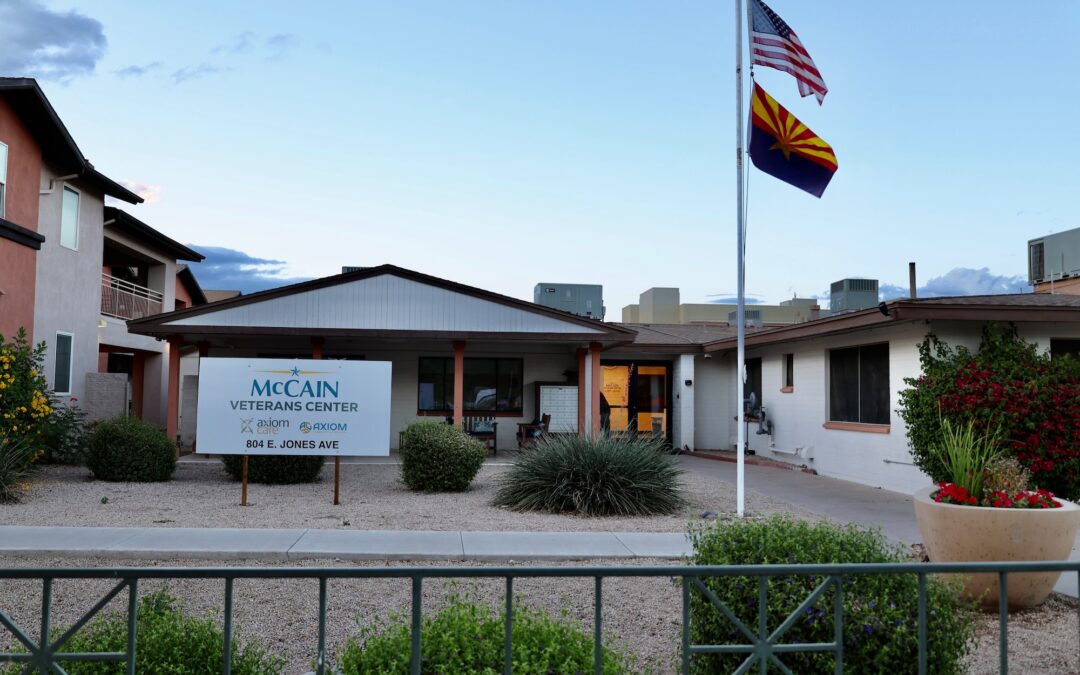
If you are researching transitional housing, the John McCain Veterans Center serves as a 60-bed supportive housing environment for veterans in need of guided support. This veteran-centered program takes into account the specialized care each veteran needs to succeed on the road to recovery. Whether that recovery is related to trauma, substance abuse, mental health conditions, or homelessness, support systems are put in place to help veterans move toward long-term stability.
Once a veteran has completed their uniquely structured program at the John McCain Veterans Center, they may also have the opportunity to transition into Victory Place, which offers a more independent-style living environment as the next step in their recovery journey.
When to Seek Help
Transitional housing can provide the stability and support veterans need for recovery. Healing comes from safe housing and continued behavioral health services. Recovery does not happen overnight, and no one should have to navigate that journey alone.
If you or someone you know is struggling with substance use, mental health challenges, homelessness, or repeated relapse, support is available.
The John McCain Veterans Center, operated by Axiom Care, provides veterans with a structured environment, integrated support services, and a path toward greater stability and independence.
To learn more about the program or discuss eligibility, contact GeorgeCampbell at 602-818-3674 or [email protected]. You can also reach Axiom Care Admissions at 602-835-0660 or [email protected].
Reaching out for help can be difficult, but taking that first step can make a meaningful difference.